Copilot Builds Dashboards Fast — Design Makes Them Useful

Copilot dramatically accelerates dashboard creation in Excel. But speed alone does not create value. Usability does.

Two Phases of Dashboard Creation

Phase 1: Analytical Construction

Copilot excels at generating KPIs, calculations, and charts.

Phase 2: Cognitive Design

Humans determine what matters, what stands out, and how insights are consumed.

Copilot Builds Dashboards Fast — Design Makes Them Useful

Why Design Drives Adoption

Dashboards fail because users struggle to interpret them. Design reduces cognitive load and increases trust.

Practical Design Improvements

  • Resize KPIs by importance
  • Group related visuals
  • Limit charts per screen
  • Use consistent typography

Key Takeaway

Copilot delivers speed. Design delivers clarity.
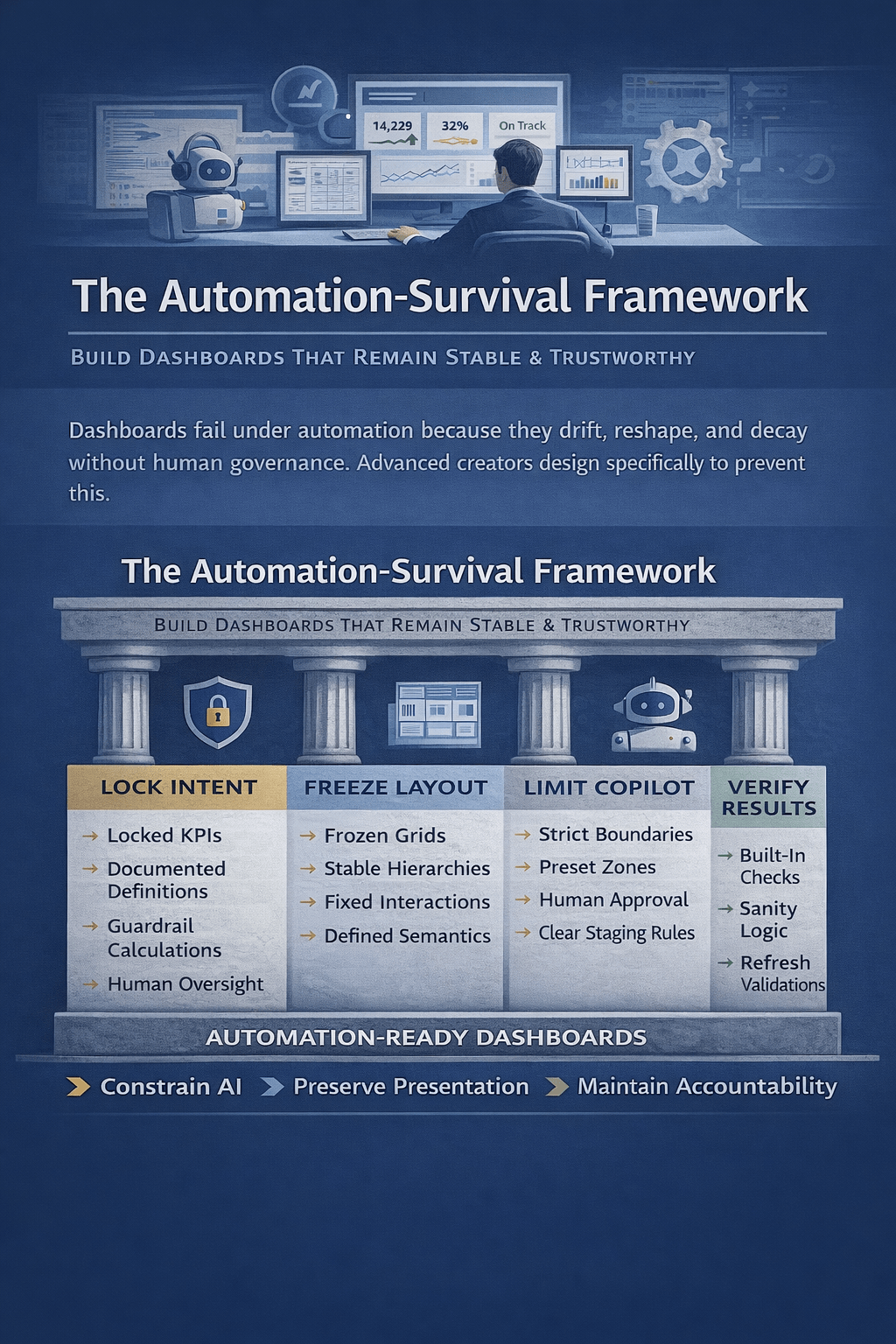
Designing Dashboards That Survive Automation

As Excel dashboards become automated and AI-assisted, many quietly lose trust, stability, and meaning. This article explains how advanced dashboard creators design dashboards that survive automation—by locking intent, constraining AI, stabilizing layouts, and preserving human accountability—so decisions remain reliable long after automation takes over.

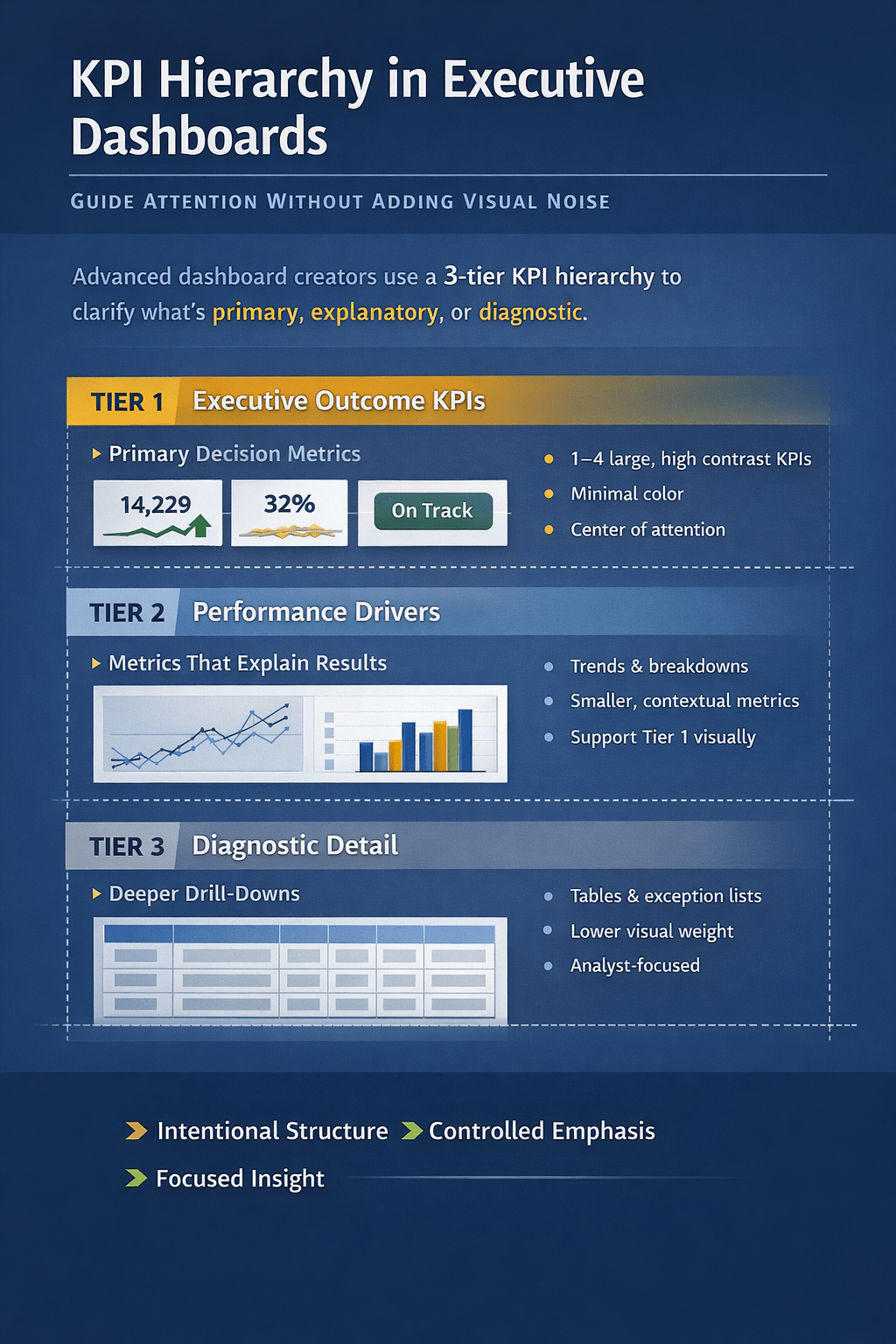
Designing KPI Hierarchy Without Visual Noise

Most Excel dashboards fail not because of missing data, but because everything looks equally important. This article explains how advanced dashboard creators design clear KPI hierarchy—without visual noise—so executives instantly know what matters, what explains it, and where to drill deeper. Learn why Copilot flattens hierarchy by default and how to design dashboards that guide…

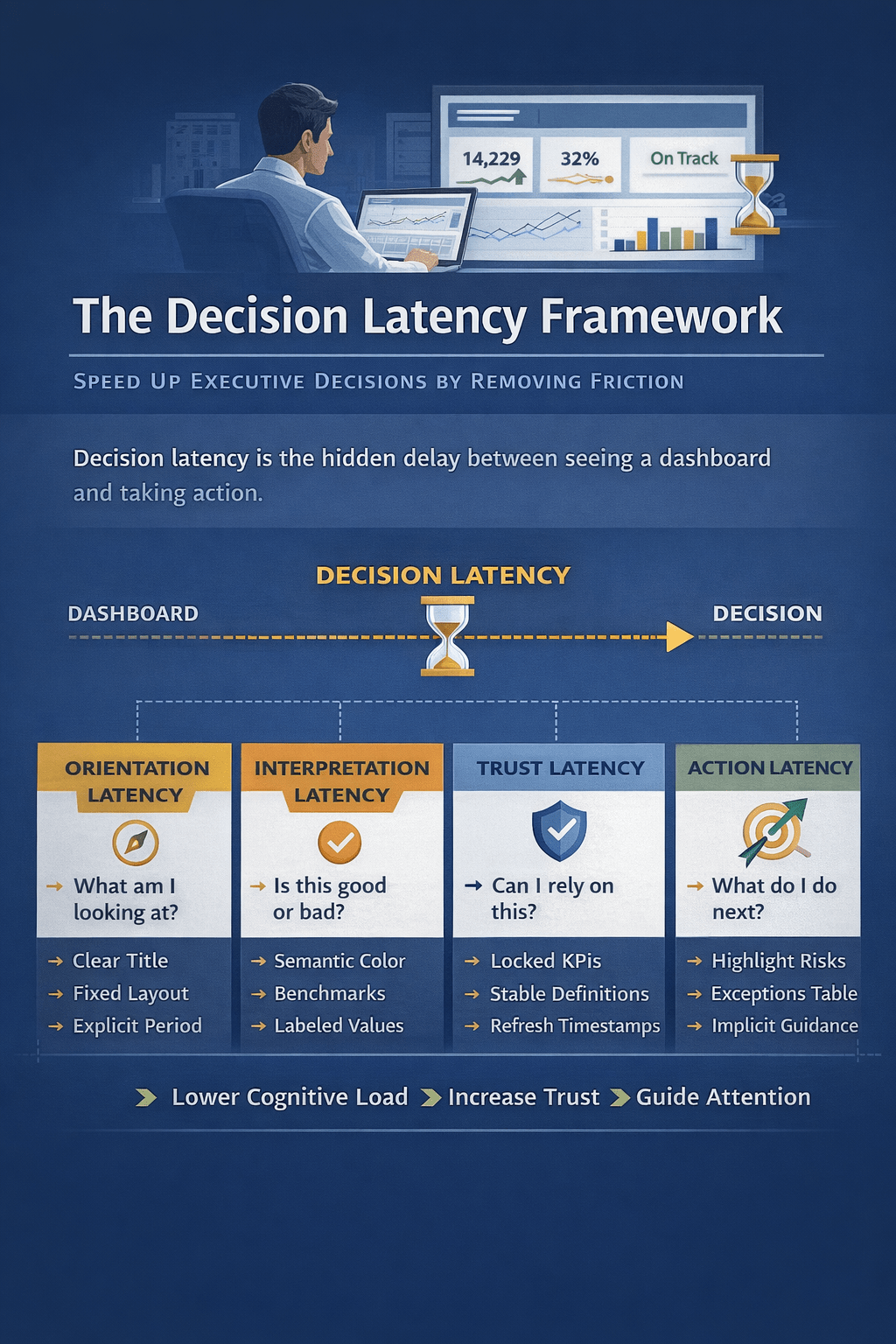
Designing Dashboards for Decision Latency

Most dashboards fail not because the data is wrong, but because decisions take too long. This article introduces decision latency—the hidden delay between insight and action—and shows how advanced Excel dashboard creators design for faster executive decisions by reducing cognitive load, building trust, and guiding attention with intent, not noise.

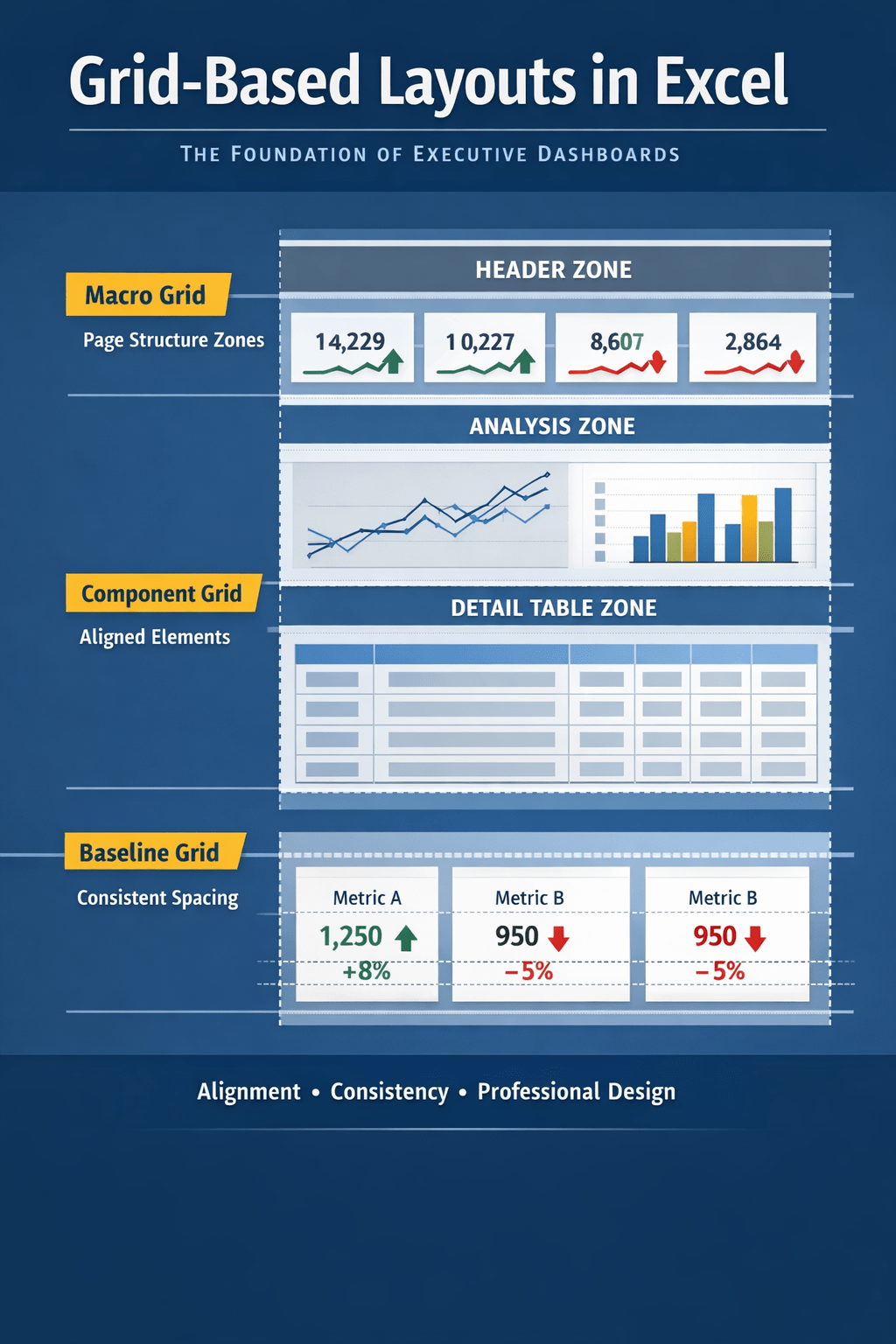
Grid-Based Layouts in Excel: The Foundation of Executive-Grade Dashboards

Grid-based layouts are the hidden foundation of executive-grade Excel dashboards. This article shows how experienced creators use structural grids—not visual guesswork—to control alignment, spacing, and hierarchy, and why Copilot-generated dashboards fail without a defined layout system. Learn how to design Excel dashboards that scale, stay consistent, and earn executive trust.